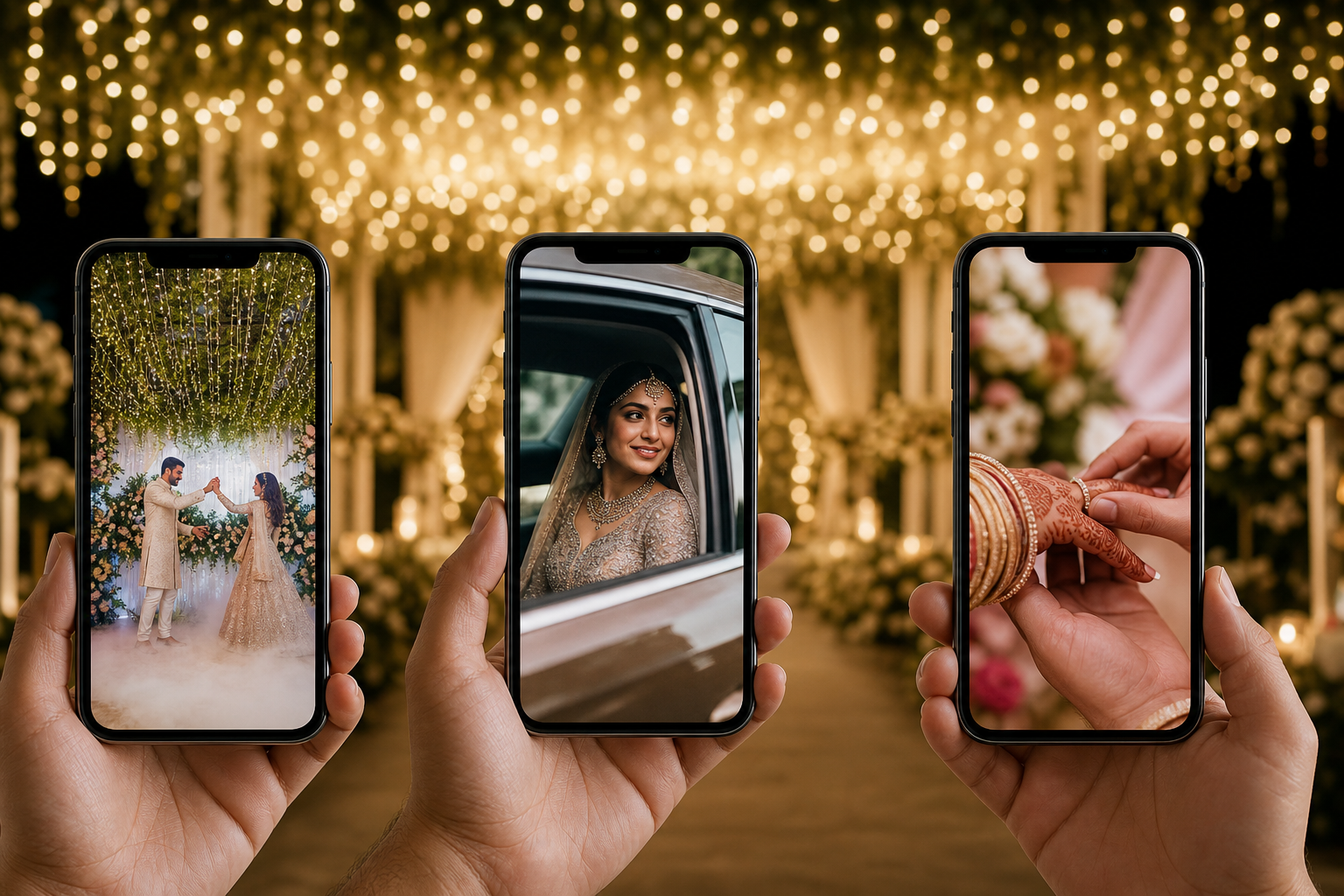
Vertical reels for weddings compared: choose the right format for your day
Compare practical production options for vertical reels for weddings: 9:16 shoots, mixed workflows, shot lists, vendor questions and deliverables.
Vertical reels for weddings compared: choose the right format for your day
What "vertical reels for weddings" means and why format matters
When planners and couples say "vertical reels for weddings" they mean short-form, phone-first video framed in a 9:16 aspect ratio for Instagram Reels, TikTok, and YouTube Shorts. Choosing vertical capture ahead of time changes camera positions, movement, lighting needs, and editing priorities. Planning the format before the wedding day is the safest approach, rather than deciding in the edit, because a full 9:16 shoot produces footage that fills the phone screen and avoids awkward cropping or composition issues during post production. For practical guidance on shooting vertical wedding video, see this walkthrough.
Technical specs to request
- Aspect ratio: 9:16 native vertical masters.
- Exports: short-form deliverables at 15s, 30s, and 60s so you can test different lengths on each platform.
- Raw clips: request original vertical clips or camera files shot vertically so editors are not forced to crop horizontal footage.
- Audio: layered music stems and a silent-friendly version with captions for autoplay environments.
Producers and content creators recommend planning audio and formats beforehand because it affects how clips are framed and how music syncs to the edit. See tips from wedding content creators for examples and platform guidance.
Platform length guidance
Short, punchy reels tend to perform best. Top creators report 15 to 30 seconds as a high-performing sweet spot, with a strong visual hook in the first second, rising energy, and a clear climax by the 20 to 30 second mark. For longer social content, include a 60 second cut as an alternate export.
Six production options compared and when each fits your day
Below are realistic approaches you will see when requesting vertical reels for weddings, with concise pros and cons so you can pick the option that matches your goals and venue constraints.
1) Dedicated full 9:16 shoot
Pros: Best composition for phone viewing, clean framing, purpose-built edits. Cons: Requires an extra shooter or vertical rig, higher complexity on the day. Recommended for couples who want social-first reels that look polished and fully optimised for phones.
2) In-camera vertical capture alongside horizontal
Pros: Two formats captured at once by the same operator or a second camera, preserves cinematic horizontal masters and phone-ready vertical clips. Cons: More crew or camera setups are required. This is a good compromise if you want both a traditional highlight film and phone-first reels.
3) Crop or reframe from horizontal footage in edit
Pros: Lower day-of complexity, no extra shooter. Cons: Risk of poor composition, headroom issues, and lost visual information. This option fits budget-conscious couples who accept trade-offs in framing and motion.
4) Multi-cam mixed-format workflow
Pros: A cinematic operator plus a dedicated social shooter captures simultaneous perspectives, ideal for high-energy receptions and cultural moments. Cons: Higher cost and more coordination. Use this for large receptions where multiple angles deliver better social clips.
5) Social-shooter add-on for reception highlights only
Pros: Targets the key hype moments without committing to full-day social coverage. Cons: Misses ceremony micro-moments unless scheduled. This works when the reception is the primary social content opportunity.
6) DIY phone capture augmented by pro editing
Pros: Very low cost. Cons: Inconsistent quality and framing, limited cinematic control. This is a last-resort option or a supplement for guests to contribute candid vertical clips that a professional editor assembles.
Decision framework: match format to your goals, timeline and venue
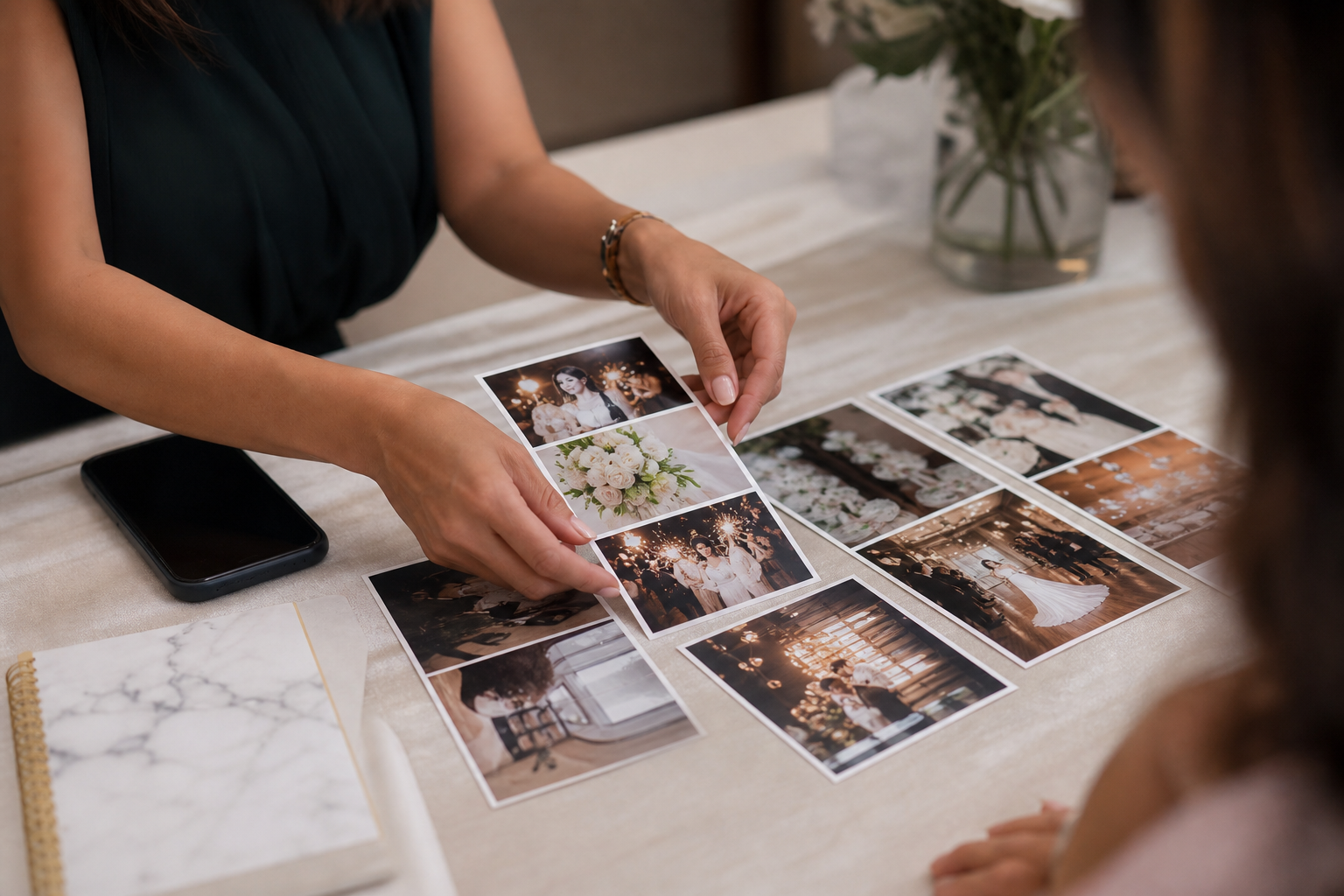
Use the checklist below to map priorities to a recommended production option.
Decision checklist
- If your priority is social-first content and mobile impressions, choose a dedicated 9:16 shoot or a social-shooter add-on.
- If you also want a cinematic horizontal highlight film, plan in-camera vertical capture alongside horizontal, or choose a multi-cam mixed-format workflow.
- If budget and crew access are limited, accept cropping from horizontal footage but be prepared for composition trade-offs.
- If you have venue or crew restrictions, schedule a short vertical reel session at golden hour to capture hero portraits in 9:16 without a day-long vertical setup.
If you want help deciding, review full-length portfolio examples from your videographer rather than only highlight reels. That practice helps you judge how each vendor handles both long edits and short social clips.
Objections and common trade-offs
- Worry: "Vertical will ruin the cinematic film." Response: Choose a mixed capture approach so you retain horizontal masters while producing vertical reels.
- Worry: "Extra crew will crowd our venue." Response: Plan exact camera positions and coordinate with the venue to place a compact social shooter in a low-traffic spot.
- Worry: "We cannot afford two shooters." Response: Prioritise the most important moments to capture vertically, such as the entrance, first dance, and reception peaks.
Shot list and timing that create high-performing reels
Short-form reels are built from compact clips that tell a story quickly. Use the 0 to 1 second hook rule, place your peak moment between 10 and 20 seconds, and close on an emotional or visually arresting frame.
Reception and dance-floor moments
- Grand entrance hook: 1 to 3 second close shots of faces, reaction frames, and the first step onto the floor.
- Hype peak: 5 to 10 second dance montage, alternating crowd reactions and close-ups of the couple or performers.
- Special effects moment: 3 to 6 seconds of cold sparklers or dry ice clouds timed to the beat.
Couple portrait and reel session
- Schedule a 10 to 15 minute vertical portrait session at golden hour for hero outdoors frames, and choose the audio track before the shoot.
- Direct movement in each clip so editors have motion to match beats, as advised by social-first creators.
Ceremony micro-moments to capture
- Vows close-up: 5 to 8 seconds of the couple exchanging lines.
- Emotional reaction: 2 to 4 seconds focused on partner or parent reactions.
Practical reel creators advise selecting three to five non-negotiable moments and sharing reference reels with your team so everyone knows the priorities for vertical coverage.
Technical and deliverable checklist to request from vendors

Ask for these items in writing so there are no surprises at delivery.
File specs and deliverables
- Native 9:16 masters shot vertically, delivered as high resolution MP4s suitable for Reels and TikTok.
- Three short edits: 15s, 30s, 60s versions optimised for autoplay and shareability.
- Raw vertical clips or camera originals labelled by event segment and timecode.
- Audio stems or layered music files, plus a silent-caption-ready version.
- Caption file or transcriptions if vows or speeches are used in a reel.
Creators recommend selecting audio before the shoot so performance and cuts match the chosen track. For social-first workflow tips, see this practical guide for wedding pros.
What to check in contracts
- Delivery timeline for social edits, especially if you plan to post the next day.
- Usage rights for music and content, and whether the vendor obtains necessary licenses.
- Exact list of deliverables and file formats, so short edits and raw vertical clips are included.
Venue, lighting and special effects: what to confirm before you plan reels
Vertical framing exaggerates vertical height, so sightlines, stage height, and power for lighting matter more in phone-first shoots. Confirm these items with your venue and vendor team well before the event.
What to ask your venue
- Are there restrictions or permits for cold sparklers, pyrotechnics, or dry ice effects?
- Where can cameras be placed to achieve vertical framing without blocking guests?
- Is there sufficient power and safe cable routing for additional lighting used for social shooters?
Because special effects like cold sparklers and dry ice are often coordinated by the production team, working with a single full-service provider can reduce back and forth with the venue. A one-team approach simplifies approvals when music, lighting, and effects must be timed for reels.
Questions to ask vendors and an on-the-day coordination checklist
Use these exact questions when you speak to videographers, DJs, and production teams, and hand the short checklist to your day-of coordinator.
Questions for your videographer or social shooter
- Will you capture native 9:16 vertical footage, or will you crop horizontal footage in post?
- Can you provide 15s, 30s, and 60s vertical edits and raw vertical clips, and within what timeframe will they be delivered?
- Do you need a separate social shooter or can the main videographer capture both formats simultaneously?
Questions for your DJ or MC
- Can we finalise entrance and music cues at least two weeks before the event so reels can be edited to the chosen track?
- Can the DJ coordinate volume and mic handoffs to match lip sync requirements for short clips?
On-the-day coordination checklist
- Place the social shooter where vertical framing captures faces and movement, without blocking guest sightlines.
- Confirm timing cues 30 minutes before each major moment so camera and effects teams are ready.
- Collect approved audio tracks and caption notes before the reception starts.
If you prefer a single point of contact to manage these items, a full-service GTA provider can coordinate DJ, lighting, effects, and videography under one plan. B-Town Entertainment bundles DJ services, MC hosting, sound and lighting, décor, photo and cinematic video, live dhol, and special effects into a coordinated experience to reduce vendor friction on event day. See B-Town Entertainment for details on integrated packages and production options.
Frequently asked questions
Do I need a dedicated vertical shooter or can my videographer crop horizontal footage?
A dedicated vertical shooter produces the best phone-first compositions, but cropping horizontal footage is a lower-cost option with composition trade-offs. If you want both a cinematic horizontal film and phone-perfect reels, plan for in-camera vertical capture alongside horizontal or a multi-cam approach.
What length should my wedding reels be for Instagram Reels and TikTok?
Short reels of 15 to 30 seconds typically perform best, with an immediate hook in the first second and a clear peak around 10 to 20 seconds. Keep a 60 second version available for platforms that support longer short-form content.
What deliverables should I request so I can post reels without extra editing?
Request native 9:16 masters, 15s, 30s, and 60s social edits, raw vertical clips labelled by segment, audio stems, and a silent-friendly captioned version. Specify delivery timelines in the contract if you need next-day posting.
Can special effects like cold sparklers or dry ice be used when filming vertical reels?
Special effects can look dramatic in vertical frames, but you must confirm venue permissions, safety plans, and staging positions with the venue and production team. Coordinate effects timing so editors can sync them to the chosen track for maximum impact.
How does hiring a full-service GTA provider change the logistics for social-first reels?
A single provider that bundles DJ, lighting, décor, videography, and effects reduces coordination time, centralises approvals with the venue, and aligns cues across teams. If you want one planner to manage music cues, camera positions, and effect timing, look for an integrated production team in the GTA.
Ready to plan vertical reels that actually perform on social? Contact B-Town Entertainment to discuss vertical-reel options and an integrated production package for your wedding.