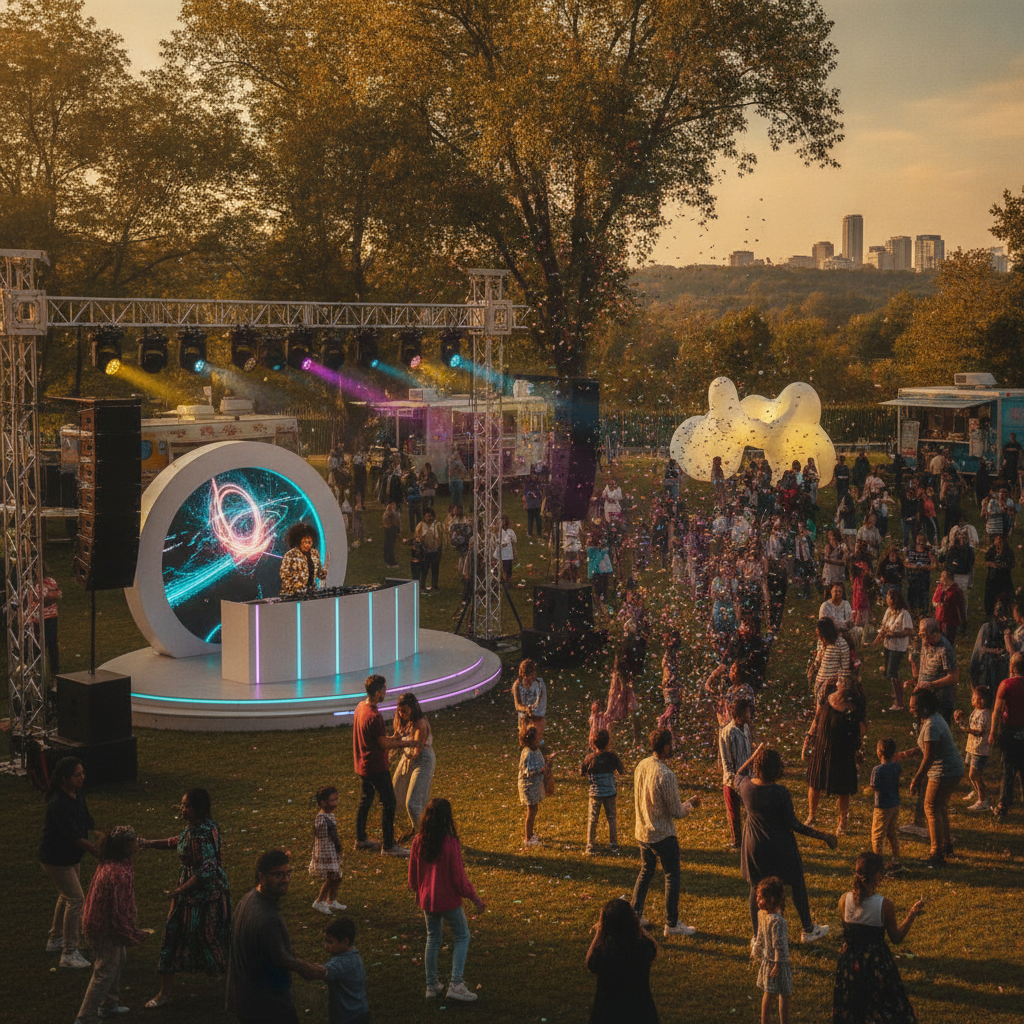
Community Event DJ Checklist: Avoid Music Gaps in Oakville
Oakville’s community event DJ checklist covering AV, multicultural music, cue sheets, dhol, and effects—so your timeline stays tight and the energy never dips.
A community event DJ checklist is a concise plan that locks your AV, music program, and show cues before doors open. For Oakville events, include multicultural segments, dhol-led moments, and a clean power plan. This prevents dead air, keeps speeches tight, and protects sponsor shout-outs across a busy program.
Overview: What You’ll Find Here
This is a practical community event DJ checklist built for Oakville and the GTA. You’ll get step-by-step planning, specific AV guidance, multicultural programming examples, and tight day-of cueing. Use it to eliminate awkward gaps, keep families engaged, and give sponsors clear, confident microphone time.
You’re 10 minutes from the cultural dance segment and the MC realizes there’s no cue sheet. That sinking feeling? Avoid it. Below is exactly how we structure shows in Oakville so your program feels seamless—and your audience feels looked after from first announcement to final song.
| Service area | Oakville and the Greater Toronto Area |
|---|---|
| Core services | Professional DJ, MC & Event Hosting, Sound & Lighting, Luxury Décor & Stage, Photo & Cinematic Video, Live Dhol, Special Effects |
| Event types | Community events, festivals, corporate functions, backyard parties, weddings |
| Specialties | South Asian & multicultural programming, baraat/entrance music, cold sparklers, dancing-on-clouds dry ice |
| Packages | Essential DJ, Wedding Experience, Luxury Production, Full-Service Wedding |
Oakville organizer tip
Lock your sound check before doors and confirm a load-in path that bypasses guest areas. Ask venues for one dedicated 15–20A circuit for DJ + lighting and a second for special effects. That separation keeps your audio clean and avoids breaker trips during sponsor remarks.
What a Community Event DJ Checklist Must Cover (and What Generic Lists Miss)
Great checklists combine cultural programming, AV detail, and cueing discipline. Generic lists miss power planning, dhol and entrance timing, and photo-first effects cues. Add those layers and your community event runs tight, feels inclusive, and photographs beautifully for post-event recaps.
- Programming depth: Short, family-friendly blocks that rotate cultures and eras. Plan walk-on bumpers and clean edits.
- Technical redundancy: Backup device mirrored to your playlists; spare XLRs; at least two wireless mic channels.
- Power and staging: Dedicated circuits, taped cable runs, and mic-positioning away from monitors.
- MC scripts: Sponsor names spelled phonetically, safety notes, and 6–10 second bumpers between items.
- Effects timing: Cold sparks/fireless fountains and dry ice cued to entrances or award reveals—never mid-speech.
For additional planning prompts beyond DJ scope, see this modern conference planning checklist, a recent event production guide, and a concise corporate event checklist.
| Checklist type | Cultural cues | AV detail | Photo-friendly effects | Team coordination |
|---|---|---|---|---|
| Generic DJ checklist | Minimal | Speakers + mixer only | Rarely covered | Loose |
| GTA multicultural event | Dhol, Bollywood/Punjabi sets | PA + wireless mics + uplighting | Often expected | MC + DJ cues |
| B-Town bundled approach | Built-in | Sound, lighting, staging | Cold sparklers, dry ice | One-team timeline |
Step-by-Step DJ Checklist for Community Events in the GTA
Phase your work: pre-production (goals, run-of-show, permits), technical (PA, wireless, power), programming (sets, requests, bumpers), and execution (rehearsals, show-calling, effects). One show-caller approves every cue so transitions are instant and safe.
- Define the run-of-show: Opening, performances, speeches, contests, awards, closing.
- Profile the audience: Age mix, languages, cultural segments, accessibility needs.
- Secure AV basics: PA, mixer, monitors, at least two wireless microphones.
- Draft the cue sheet: MC lines, sponsor mentions, pronunciations, and music bumpers.
- Build set segments: Bollywood/Punjabi, Top 40, Soca/Afrobeat, and classics in 15–25 minute blocks.
- Plan entrances: Dhol-led walk-ons (4–6 minutes) and prize moments; photo ops marked.
- Confirm power + load-in: Circuits, parking, elevator windows, and security check-ins.
- Finalize effects: Cold spark positions, dry ice safety zones, and operator cues.
Opinion: Skip single-speaker rigs for any audience over ~150. The back third will complain, and sponsor videos sound muffled. Two mains and proper mic gain save you from that email on Monday.
Centralize everything with one team. Our services overview shows how DJ, MC, dhol, décor, photo/video, and effects align under one coordinated plan.
Sound & AV Setup Checklist (PA, Wireless Mics, Uplighting)
Use two full-range mains, a real mixer, and at least two wireless mics. Separate audio and effects power, tape cable paths, and line-check every input. Add uplighting to define the space and keep stage levels speech-friendly.
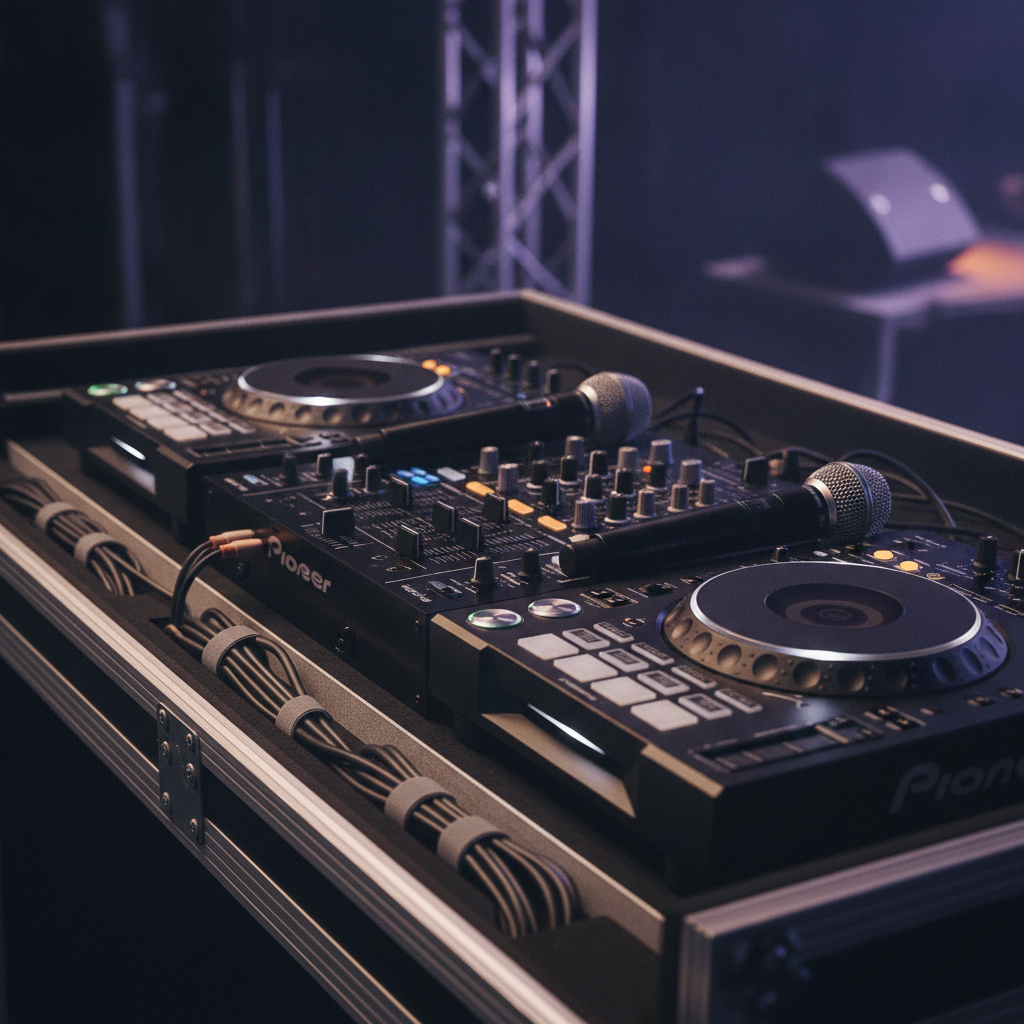
- PA + mixer: Stereo L/R mains, monitors angled off-axis from mic positions to reduce feedback.
- Wireless mics: Two is minimum; three if you have translators or a panel. Fresh batteries before doors.
- Playback redundancy: Primary laptop plus a mirrored backup device ready to press play.
- Cabling: Gaffer-taped runs along walls or stage edges; zero trip hazards.
- Lighting: Static uplighting in one controlled color temperature; avoid strobe during speeches.
- Power: Dedicated circuit for audio; separate for lights/effects to avoid hum and breaker trips.
- Line check: 30 minutes before doors—test each mic, playlist cue, and effect trigger.
Need simple and fast? Our plug & play DJ setup covers PA, wireless microphones, and basic uplighting without overcomplicating small community rooms.
Music Programming Checklist for Multicultural Crowds
Rotate cultures and eras in 15–25 minute blocks, use clean edits, and place dhol accents at entrances and contests. Build crossovers that welcome families early and ramp energy as the program peaks.
- Open inclusive: Start with classics and Bollywood crossovers to pull in 40+ and kids together.
- Block design: Alternate Bollywood/Punjabi → Top 40 → Soca/Afrobeat → return to classics.
- Requests: Collect via QR or booth list; screen for lyrics and fit.
- Clean edits: Daytime programs need radio-safe versions; avoid explicit content.
- Transitions: Tempo- or key-matched blends; no dead air between items.
Example 12-minute opener we use often in the GTA: warm intro with a Bollywood classic hook → modern Bollywood remix → 2000s Top 40 sing-along → quick Punjabi bhangra lift once the floor warms. Families feel included; energy climbs without alienating anyone.
See real setups and room flows in our event gallery and browse programming ideas on our blog. Want live hype? Add our live dhol option for entrances and contests.
Coordination Checklist: DJ + MC + Dhol + Special Effects
One show-caller cues DJ, MC, dhol, and effects. Everyone runs the same timeline with track IDs and mic names. Effects fire only on a visual nod from the show-caller to keep safety first and photos perfect.
- Show-caller: Holds comms and owns timing. No one fires cues solo.
- MC script: Open, sponsor thanks, transitions, safety notes, and closing lines.
- Dhol notes: Entry tempos and lengths; cut on MC cue, not guesswork.
- Effects ops: Sparkler/dry ice cue sheets, safe zones marked with tape.
- Media team: Shot list for entrances, awards, crowd moments, and effects.
Opinion: Dry ice on a community stage is worth it for entrances—if a dedicated operator controls it. Don’t hand that trigger to the DJ; it splits focus and invites mistakes.
Putting all roles under one brand keeps handoffs invisible to the audience. Explore our customizable packages to bundle MC flow, DJ, dhol, lighting, décor, photo/video, and effects.
Day-Of Production Checklist (Grand Entrances, Baraat, Reception Flow)
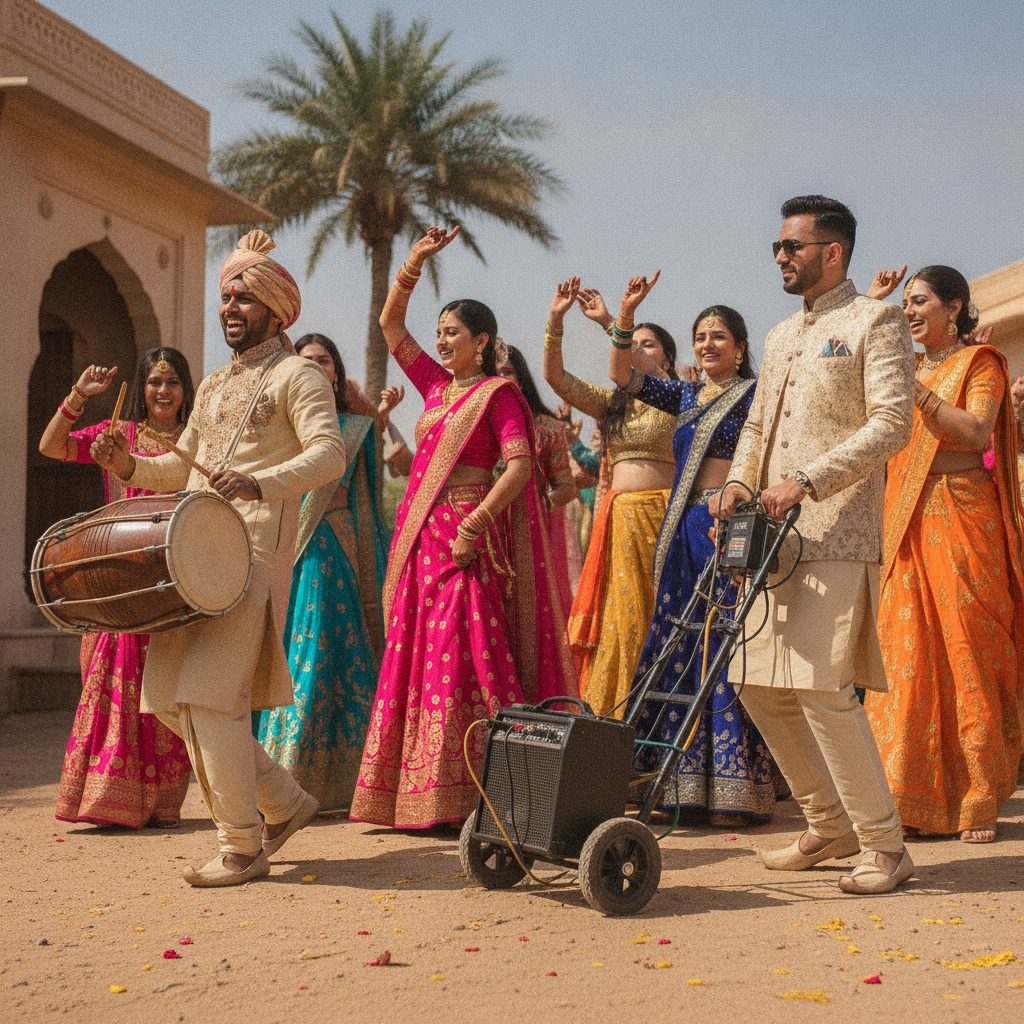
Walk the room, test the PA, rehearse entrances, and confirm pronunciations. For baraat-style processions, place dhol ahead of the crowd with a battery PA shadowing. Lock timing with a five-minute buffer before each live cue.
- Site walk: Map staging, crowd paths, and emergency egress before setup.
- Sound check: Set mic gains for speech intelligibility; music peaks controlled.
- Entrances: Rehearse walk-ons with dhol and 6–10 second bumpers.
- Baraat logistics: Battery PA follows the procession; safety marshal rides the flank.
- Effects: Test cold sparks and dry ice only in marked zones with operators present.
- Pronunciations: Confirm names and titles in the cue sheet—no guesswork live.
- Buffers: Hold a five-minute cushion before each stage cue to recover from delays.
Ready to translate your run-of-show into cues? Share your draft on a planning call and we’ll map music, mics, and effects to each moment. Start here: reserve your date or scan our FAQ for details.
Local Tip: GTA Venue-Specific Considerations
Oakville and GTA venues often require proof of insurance, approved vendor lists, and fixed load-in windows. Get power specs and sound limits in writing and share your cue sheet early so security and housekeeping align around entrances and effects.
Local considerations for Oakville
- Many community venues enforce earlier shutoff times—schedule family and cultural segments earlier.
- Outdoor permits may define amplified sound windows; plan dhol-led entries within them.
- Weekends fill fast; lock your load-in/out windows when submitting the vendor list.
Frequently Asked Questions
How many microphones do we need for a community event?
Two wireless mics is the minimum—one for the MC and one for guests or backup. If you have a panel or translator, bring a third. Label each, install fresh batteries, and scan for clean frequencies during sound check.
What should be in a multicultural music plan?
Rotate 15–25 minute blocks: Bollywood/Punjabi, Top 40, Soca/Afrobeat, and classics. Use family-friendly edits, prep 6–10 second bumpers for transitions, and add dhol accents to entrances and contests.
How do we avoid dead air between segments?
Write a cue sheet that pairs every announcement with a bumper track. Keep a mirrored backup device ready, and assign a show-caller to count down transitions so your DJ hits play on cue every time.
Are cold sparklers and dry ice suitable for community stages?
Yes—if the venue permits and trained operators manage them. Place units in marked safe zones, confirm dedicated power and ventilation, and sync timing with the MC and photo/video team for a clean, safe reveal.
Key Takeaways
- Center your community event DJ checklist on AV, programming, and show-calling.
- Use short, multicultural blocks and dhol-led entrances to engage every age group.
- In Oakville, lock power, load-in, and sound limits before show day.
- Bundle roles (DJ, MC, dhol, effects, media) under one team to prevent gaps.