Backyard Party Lighting Ideas for a Safe, Photo-Ready GTA
Plan backyard party lighting ideas for an Oakville event with layered string lights, safe paths, focused accents, and DJ-ready effects that look great in a
Last updated: October 2026
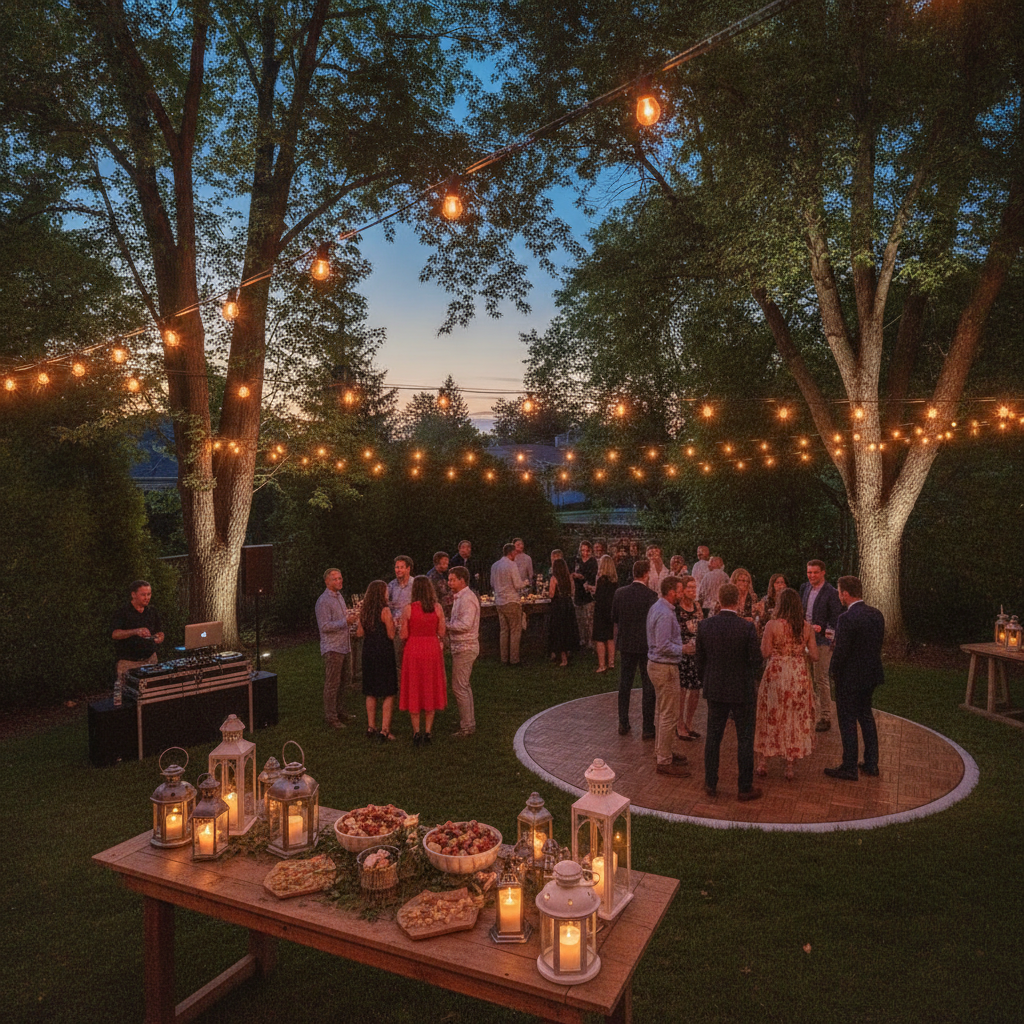
Backyard party lighting ideas work best when they solve three problems at once: helping people move safely, making the space feel inviting, and giving important moments enough visual focus. A few well-placed layers usually create a more polished result than filling the entire yard with bright fixtures.
For an Oakville backyard or another GTA celebration, begin with the layout rather than the equipment. Mark the arrival route, dining area, buffet or bar, lounge, washroom path, photo location, and dance floor. Then choose light for each job and coordinate it with the event timeline, whether the night includes a DJ set, speeches, a Jaggo entrance, live dhol, or a first dance.
What should backyard party lighting accomplish?
Good outdoor lighting should make the next action obvious. Guests need to see where to walk, where to sit, and where food is being served, while the host needs enough control to shift the mood as daylight fades and the celebration becomes more energetic.
- Welcome: Make the entry, steps, and first gathering point easy to recognize.
- Guide: Define paths between the house, seating, food, washrooms, and exit.
- Support: Give buffets, bars, stairs, and serving areas useful light without glare.
- Focus: Draw attention to a cake, sweetheart table, dance floor, backdrop, or entrance.
- Adapt: Keep dinner comfortable, then add controlled colour and movement for dancing.
This approach also prevents a common mistake: using one very bright floodlight for the whole property. A single source creates harsh shadows, glare, and a flat look in photographs. Layered fixtures allow each zone to have an appropriate brightness and character.
Four lighting layers for a backyard party
Think of a backyard as a small venue with several rooms that happen to be outdoors. Each layer has a different purpose, and the strongest designs combine them rather than asking string lights or uplights to do everything.
Ambient light for dining and conversation
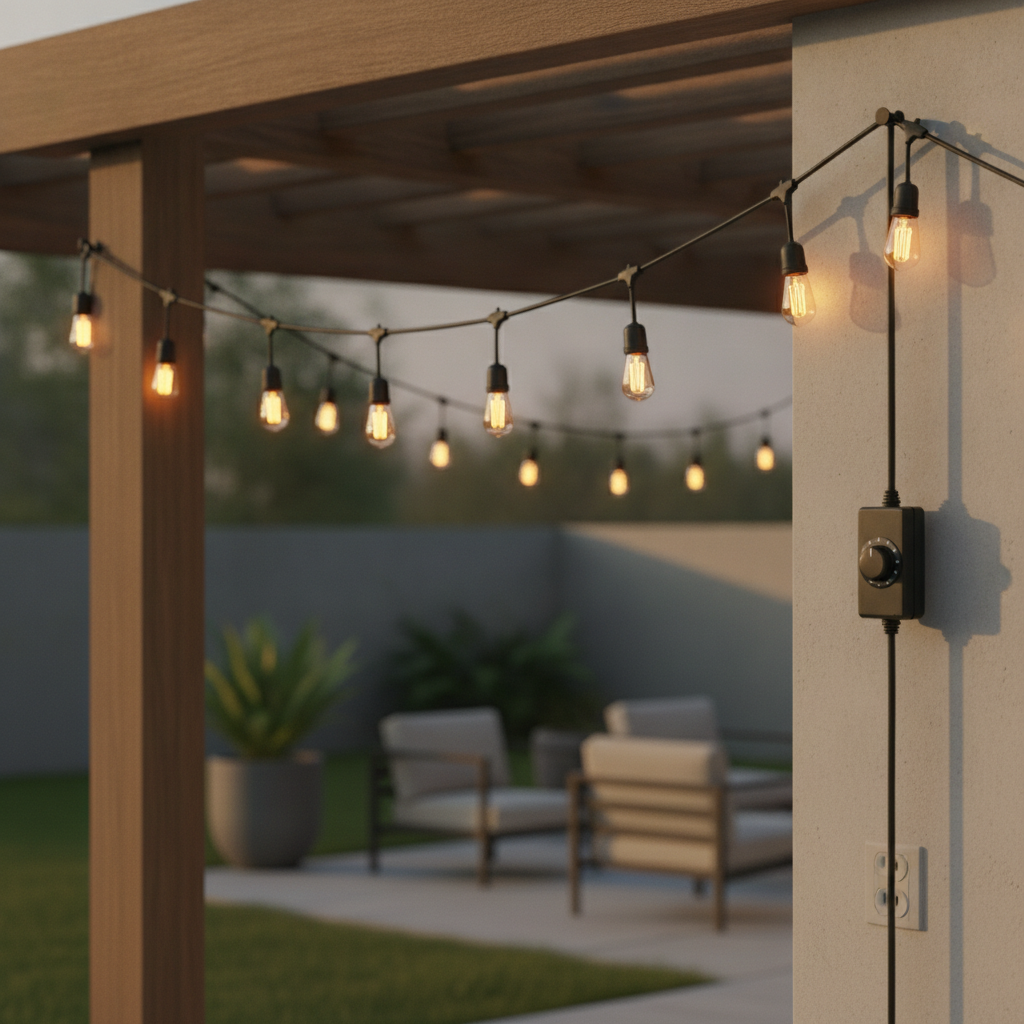
Ambient lighting establishes the base mood. String lights, festoon lights, lanterns, and softly diffused outdoor fixtures can cover a dining table, pergola, patio, or lounge without making the area feel like a worksite.
Warm-white light around 2700–3000K is a practical choice for faces, food, and conversation. A zigzag canopy, perimeter run, or parallel lines can work well, but anchor the installation to points that can handle the weight and movement of the fixtures. Keep runs taut enough to avoid sagging while allowing for wind and normal outdoor movement.
Task light for food, steps, and service areas
Task lighting is brighter and more focused. Use it where guests need to read labels, serve food, pour drinks, or judge a step. Small downward-facing lights under a bar shelf, a soft fixture above a buffet, and low-level step lights are usually more useful than another decorative string.
Place task fixtures so their beams fall onto the work surface rather than directly into guests’ eyes. If a buffet sits beneath warm strings, a discreet neutral or warm-white light aimed downward can improve visibility without overpowering the rest of the yard.
Accent light for trees, walls, and décor
Accent lighting creates depth. Uplights can reveal the shape of a tree, a stone wall, a fence, or a floral installation, while a pinspot can isolate a cake, centrepiece, or sign. A wide wash behind a sweetheart table can create separation without making the couple look overlit.
Keep accents below eye level where possible and aim them inward. This reduces glare for guests, neighbours, and cameras. Colour-changing fixtures are most effective when used selectively on a dance wall, tree line, or backdrop rather than across every surface.
Effect light for entrances and dancing
Dance-floor lighting should support the music zone without taking over the dining and conversation areas. A compact wash, moving light, or controlled effect can follow the energy of the DJ or live dhol, while steady ambient light keeps paths and seating comfortable.
Reserve high-impact effects for clear moments such as an entrance, first dance, cake cutting, or dance-floor opening. A cue is more memorable when it contrasts with the calmer scene before it.
A practical backyard lighting layout by zone
Before buying or hiring equipment, draw a simple overhead plan. The goal is not architectural precision; it is to identify movement, sightlines, power points, and the places where brightness must change.
Entry and arrival route
Use lanterns, low path lights, or gentle wall illumination to show guests where to enter. Avoid pointing a fixture toward the driveway or directly at arriving guests. If the route includes steps, light the tread and change in level rather than relying on a distant flood.
Dining and lounge area
Place the warmest, softest layer here. Overhead strings can define the footprint, while a subtle background wash gives faces and photographs more depth. Keep fixtures high enough to prevent head bumps and make sure support points are stable before guests arrive.
Buffet, bar, and cake table
These areas need focused light, but the light should not shine across the room. Aim a small fixture down toward the surface, then add a pinspot or background wash if the table is also a visual feature. Keep cables away from the service line, where people tend to stand and turn.
Dance floor and DJ position
Place the DJ where power is dependable and guests will not need to cross speaker or lighting cables. The dance floor benefits from a darker surrounding edge and controlled light from above or behind the DJ, rather than a bright source aimed at dancers’ faces.
If speeches are part of the schedule, keep a clean microphone position and a flattering front light available. The same lighting system can move from a calm formal setting to a more dynamic dance scene when the DJ or MC has clear cues.
Photo corner and focal backdrop
A photo area needs consistent faces, a simple background, and enough separation from the rest of the yard. Use a soft front or side fill, a gentle wall wash, and a small amount of backlight where possible. Avoid placing the strongest fixture behind the subjects, which can turn faces into silhouettes.
How to choose string lights and outdoor fixtures
Start with the visual job, then check the product rating and installation requirements. Decorative appearance should never be the only selection criterion for equipment exposed to moisture, wind, or repeated handling.
- String or festoon lights: Best for broad, warm coverage over patios, pergolas, and dining areas.
- Path and step lights: Best for edges, stairs, and routes between activity zones.
- Uplights: Best for trees, fences, walls, and architectural features.
- Pinspots: Best for cakes, centrepieces, signs, and other small focal details.
- Soft washes: Best for backdrops, sweetheart tables, and controlled colour.
- Lanterns and LED candles: Best for intimate table texture and low-level wayfinding.
Look for outdoor-suitable equipment and recognized certification marks. Natural Resources Canada’s lighting guidance recommends outdoor-rated fixtures for landscape applications and notes that electrical devices should carry an appropriate CSA or cUL mark. For a deeper reference, review the Natural Resources Canada home lighting design guide.
Ontario outdoor electrical safety for party lighting
Outdoor event lighting adds moisture, temporary cords, moving guests, and multiple pieces of equipment to the same environment. Use equipment suited to outdoor or damp conditions, keep connections protected, and have a qualified person assess any installation that goes beyond straightforward plug-in equipment.
Ontario’s live-performance safety guidance states that outdoor or damp-location equipment must be suitable for those conditions and that power supplies in such locations should pass through a Type A ground-fault circuit interrupter. Its electrical guidance also addresses approved equipment and certification requirements. Read the Ontario electrical safety guidance for live performance environments before planning a larger temporary setup.
Protect connections and route cables deliberately
Use outdoor-rated, grounded extension cords and GFCI protection. Keep plugs and junctions raised from wet grass, shield them from rain, and avoid placing them where guests can step, sit, or spill drinks. Run cables beside fences, planters, or the edge of a structure whenever possible.
Where a crossing cannot be avoided, use an appropriate cable cover and make the route visible. Never run a loose cord across stairs or leave a coil where it can catch a foot. The Electrical Safety Authority also recommends choosing three-prong outdoor-rated extension cords and connecting them to a GFCI-protected outlet for special events; its special-events electrical guidance is a useful planning reference.
Inspect decorative lighting before guests arrive
Check sockets, insulation, strain relief, plugs, and cable joins. Do not use a string with exposed conductors, damaged insulation, signs of overheating, or loose lamp holders. Health Canada identifies shock, overheating, and fire hazards associated with defective decorative lighting strings; its decorative lighting safety assessment explains why inspection matters.
Keep spare bulbs and a tested replacement cord available, but do not improvise repairs during the party. If the system trips, smells hot, or behaves unexpectedly, switch it off and investigate safely rather than repeatedly resetting it.
Power planning and the dusk test
List each lighting group, speaker, DJ controller, microphone receiver, charger, and effect before assigning outlets. Follow the equipment manufacturer’s load instructions, avoid overloading a circuit, and keep lighting and sound routes organized so a fault in one zone does not disrupt the whole evening.
- Map the zones: Mark arrival, dining, lounge, service, photo, dance, and exit areas.
- Inventory the equipment: Record each fixture, cable, control, speaker, and power requirement.
- Assign power: Confirm suitable outlets, GFCI protection, cord lengths, and protected connection points.
- Route cables: Keep runs beside edges, cover necessary crossings, and label both ends.
- Test at dusk: Check brightness, faces, paths, glare, photos, and sightlines before guests arrive.
- Prepare cues: Note when lights should shift for dinner, speeches, entrances, first dance, and open dancing.
The dusk test is particularly valuable because a layout that looks balanced in daylight can produce glare or dark gaps after sunset. Walk every guest route, view the yard from the photo position, and stand where the DJ or MC will address the group.
Coordinating lighting with DJ, MC, and cultural celebrations
Lighting is more effective when it follows the event rather than running at one setting all night. Keep ambient and path light stable while the DJ or MC controls a smaller group of scene changes. That keeps formal moments readable and gives the dance floor a clear transition.
For a multicultural celebration, the plan may include a Jaggo or dhol entrance, family speeches, a Roka or engagement moment, a cake cutting, and several dance-floor peaks. Warm, steady light supports introductions and toasts; colour washes and movement can enter when the music opens up. A coordinated GTA event entertainment team can keep the sound, microphone, lighting, and effects timeline in one place.
Using special effects without overwhelming the yard
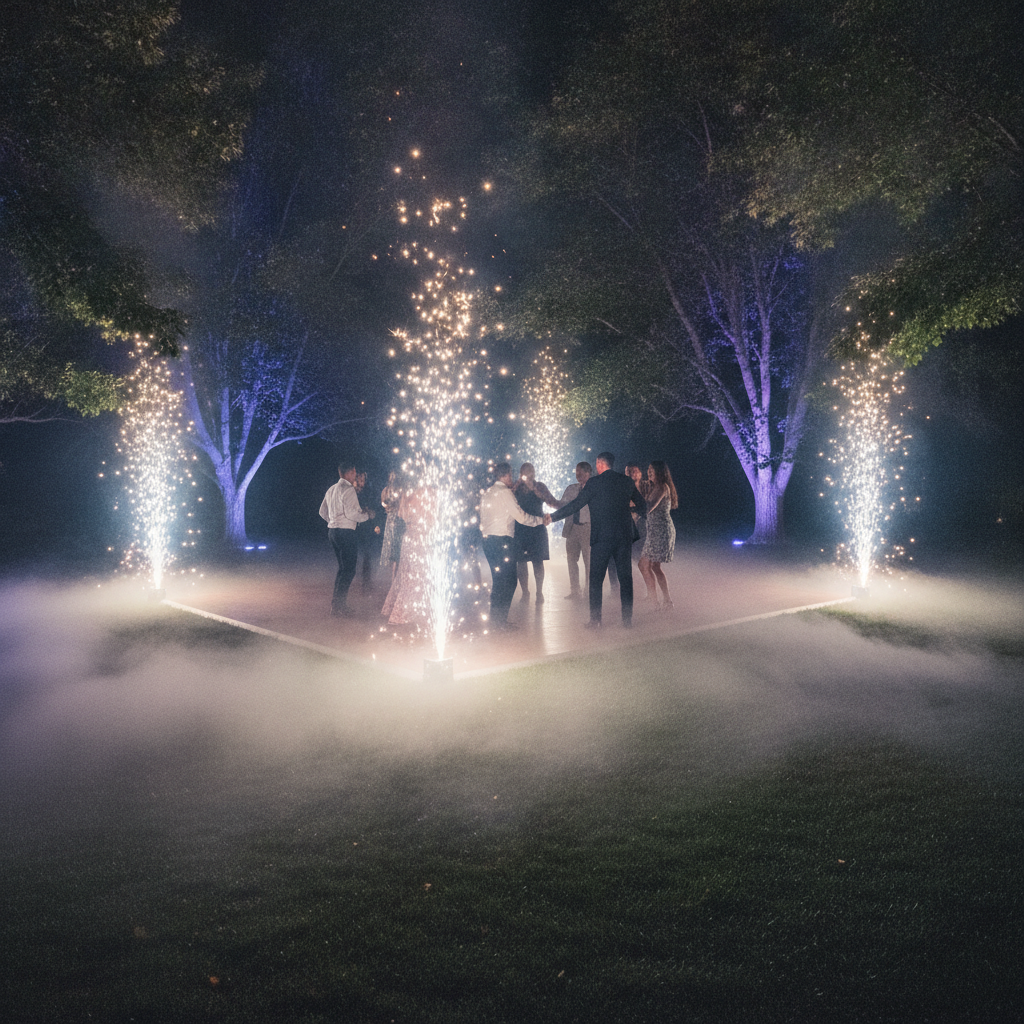
Cold sparks, low-lying fog, and moving lights can create a strong entrance or first-dance image, but they need more planning than decorative fixtures. Keep effects away from dry grass, loose fabric, overhead branches, and crowded circulation routes. Confirm the venue conditions, equipment instructions, and operator requirements before including them.
Use one or two deliberate moments instead of leaving every effect active throughout the party. Low fog can frame a first dance while keeping the surrounding lighting soft. A pair of controlled effects can mark an entrance, while a dance wash can take over once guests are invited onto the floor.
Photo-ready backyard lighting
Photographs look more consistent when the main areas use similar colour temperatures. Mixing very cool floodlights with warm string lights can make skin tones and food look uneven. Keep the brightest source off-axis from the camera, soften direct beams, and create some background separation behind the subjects.
- Use warm, indirect light for speeches and family portraits.
- Keep a subtle wash on the background so the yard does not disappear into black.
- Place a pinspot on a cake or centrepiece, but avoid a hard beam across faces.
- Check the photo corner from the photographer’s actual position, not only from the host’s seat.
- Leave enough space around the dance floor for entrances, group images, and movement.
Tell the entertainment and media team about must-have moments in advance. A lighting cue can be timed with an entrance, speech, first dance, or dhol beat so the visual change supports the photograph instead of distracting from it.
DIY or professional backyard party lighting?
DIY lighting can be suitable for a small dinner when the layout is simple, the equipment is plug-in and outdoor-suitable, and a responsible adult can monitor it. Professional support becomes more useful when the event includes multiple zones, a DJ, speeches, effects, a large guest movement pattern, or a tight setup window.
| Choose a DIY setup when | Consider professional support when |
|---|---|
| The event has one or two simple activity areas. | The yard needs separate dining, lounge, photo, service, and dance scenes. |
| Plug-in fixtures and existing outlets cover the plan safely. | Sound, lighting, microphones, and effects must share a coordinated power and cue plan. |
| You can install, test, monitor, and remove the equipment. | The host wants to focus on guests instead of troubleshooting cables and scene changes. |
| There are no complex effects or difficult access points. | The celebration includes entrances, live dhol, special effects, or photo-critical formalities. |
B-Town Entertainment is a Brampton-based production brand serving Oakville and the wider GTA, including Brampton, Mississauga, Toronto, Vaughan, Etobicoke, Caledon, and Milton. Its coordinated offering can combine DJ services, MC hosting, sound, lighting, décor, photo and video, live dhol, and special effects for weddings, milestone celebrations, backyard parties, and private events.
Backyard party lighting checklist
- Draw the guest routes and identify every step, edge, and change in level.
- Choose warm ambient light for dining and softer, focused light for service areas.
- Use accents on trees, walls, tables, or backdrops rather than flooding the whole yard.
- Confirm outdoor suitability, certification marks, cord condition, and GFCI protection.
- Keep plugs and joins protected from moisture and away from foot traffic.
- Test the lighting at dusk from the guest, DJ, MC, and camera positions.
- Write down cues for dinner, speeches, entrances, first dance, and open dancing.
- Assign one person or one production team to monitor changes during the event.
Frequently asked questions
What are the best backyard party lighting ideas for a small yard?
Use one warm string-light canopy over the main seating area, low path or step lights for transitions, and one or two focused accents on a tree, wall, cake table, or photo corner. Keeping the number of zones small helps the yard feel intentional rather than crowded. A dimmer can provide more flexibility than adding many extra fixtures.
What colour temperature works best for outdoor parties?
Warm-white light around 2700–3000K is generally comfortable for dining, conversation, food, and portraits. Neutral or coloured light can be added selectively for buffets, trees, backdrops, or dancing. Keeping the main face-lighting consistent makes photos and video look more natural.
How can I power backyard lights safely in Ontario?
Use outdoor-rated, grounded cords and equipment, connect outdoor power through appropriate GFCI protection, and keep plugs and joins protected from moisture and foot traffic. Follow manufacturer instructions and Ontario safety guidance, and use qualified help for installations or electrical work beyond simple, suitable plug-in equipment. Inspect decorative strings for damage before use.
Can backyard lighting include a DJ and special effects?
Yes, but the lighting should be divided into steady guest-comfort layers and controlled dance or effect layers. Warm strings and path lights can remain consistent while dance washes, low fog, or cold sparks are cued for entrances, first dances, or open dancing. A coordinated DJ, MC, and production team can manage those transitions more reliably than several unrelated operators.
Plan your Oakville backyard celebration
A successful backyard lighting plan starts with zones, not decoration: make paths safe, make faces flattering, make service areas usable, and reserve visual impact for the moments that matter. If you want one team to coordinate DJ energy, MC timing, sound, lighting, décor, media, dhol, and effects, contact B-Town Entertainment about your backyard celebration.